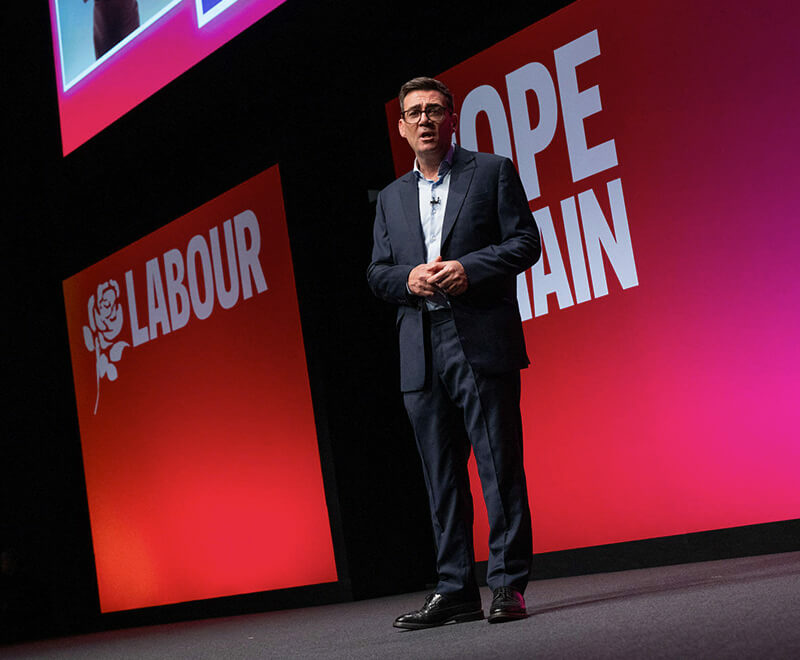
Andy Burnham spent Labour Party Conference trying to turn “Manchesterism” into something bigger than Manchester.
“I have a theory of growth,” he told delegates in Liverpool. His argument was that stronger local institutions, greater public control and more devolution can give places greater control over their own economies and create the conditions for growth.
But as Burnham was making the case for Manchesterism in Liverpool, events back in Manchester were raising a rather different question about how it works on the national stage.
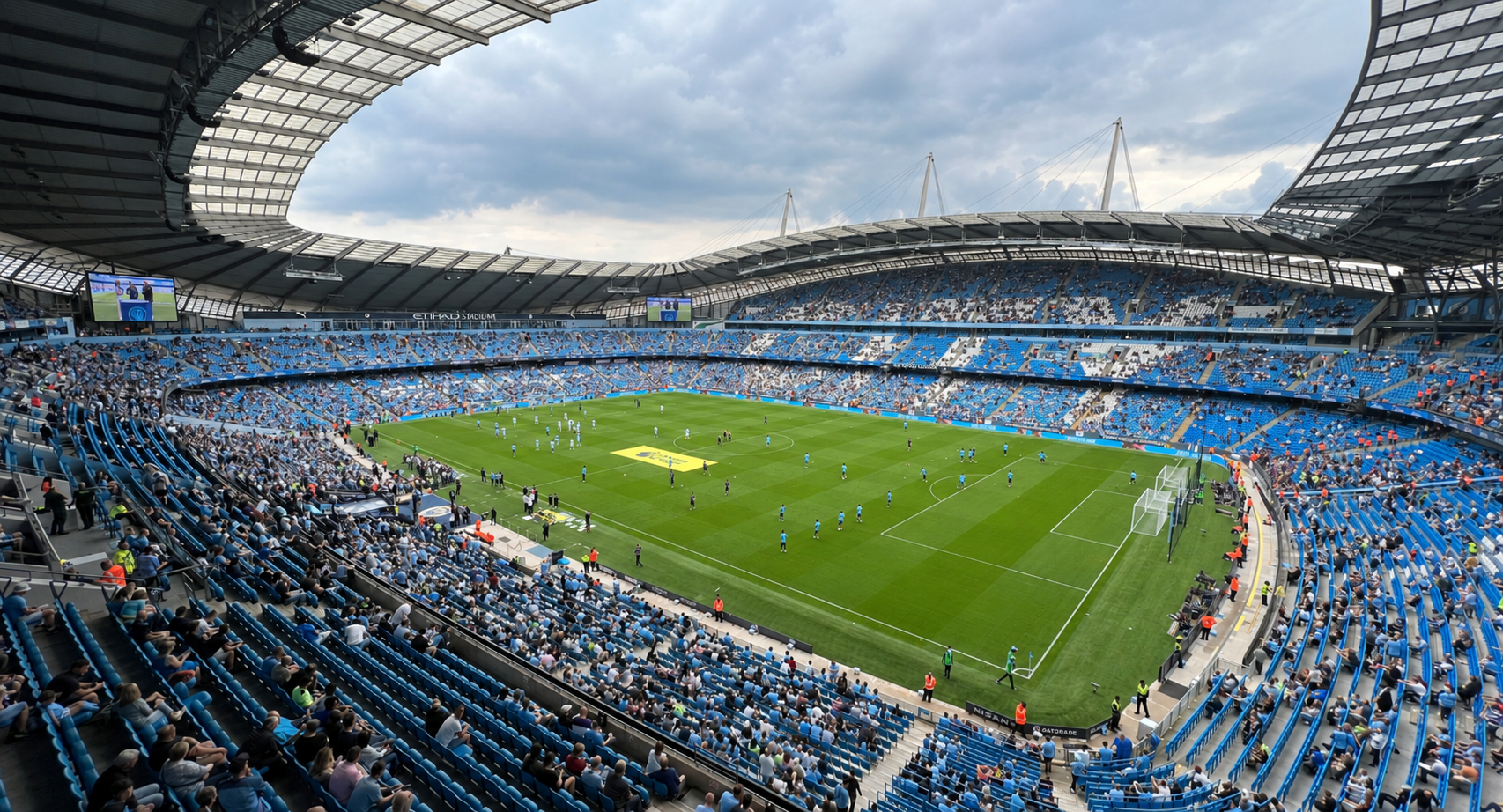
The findings against Manchester City are by now well-rehearsed. The scale of the case is unprecedented, with the club found guilty of over 100 charges relating to breaches of the Premier League’s financial rules. For Burnham, the political difficulty lies in his own response. He said he would be “really concerned” to lose City’s Abu Dhabi owners, describing the City Football Group as a “huge partner in the building of modern Manchester”.
Burnham’s intervention has also drawn him further into the story. Downing Street was forced to clarify that he was not siding with City, while the Liberal Democrats have called for details of his meetings and hospitality involving the club’s owners to be published. With City’s appeal still to come and the wider fallout continuing, a relationship Burnham cited as evidence of Manchester’s success is now attracting scrutiny of his own judgement as Prime Minister.
Burnham’s pitch for Manchesterism is rooted in devolution and giving places more control over their own economies. But Manchester’s growth story also owes something to its success in attracting private and international investment, with Abu Dhabi the most obvious example.
That relationship extends well beyond football. Questions have resurfaced about Manchester Life, the partnership between Manchester City Council and Abu Dhabi United Group, and the terms on which parts of east Manchester were developed. Even the proposed site for Burnham’s “No. 10 North” has links to land previously earmarked through the Manchester Life arrangements, which predate his time as Mayor.
The fallout from the City case is also spreading. The UAE has warned that the ruling could affect its wider relationship with Britain, with billions of pounds of prospective UK investment potentially at risk. Etihad Airways, Abu Dhabi’s state-owned airline and City’s principal sponsor, has also rejected any implication that it was involved in improper commercial arrangements and criticised the Premier League’s communications around the findings.
That leaves Burnham in an awkward position. The relationship with Abu Dhabi is one he has been happy to point to when talking about Manchester’s success. From Downing Street, he now has to deal with the consequences of that relationship stretching far beyond Manchester.
The Premier League is itself one of Britain’s most successful exports and a significant source of soft power. Its value depends, at least in part, on the credibility of the competition and the belief that its rules mean something.
The issue is not whether Britain should welcome foreign investment. It should. Manchester provides plenty of evidence of what that type of investment can deliver. The question is what happens when foreign state-backed investment becomes closely tied to institutions that have significant cultural and economic value of their own.
That is particularly relevant when a dispute involving one of those institutions starts to affect apparently unrelated investment decisions. If the prospect of withdrawing billions of pounds of investment becomes part of the response to a ruling by the independent commission, it raises questions about how much leverage that investment provides.
Burnham has acknowledged some of this himself, saying the case could have implications for the Premier League and “brand UK”. Downing Street has also stressed that nobody should be above the rules.
None of this undermines the case for greater devolution. Nor does it undo Manchester’s economic transformation. But it complicates the idea that Manchesterism can simply be taken national. The city’s success has involved more than devolved power and stronger local institutions. Its ability to attract major international investors, helped by the global success of the Premier League, has been part of the story too.
The City case therefore leaves Burnham with two important tests for the Manchesterism he set out at Labour Conference. He has to show that it can work for places without Manchester’s particular advantages, and that its promise of greater local control can withstand the pressure when a powerful investor threatens to walk away. If Manchesterism is to become a national theory of growth, it will have to pass both.