Written by Pagefield Group Associate Director, Tom Wilson
Often the Labour Party ends its party conference each year breathing a sigh of relief, such were the nerves and expectations of a party that has been politically underwater since shortly after its 2024 landslide with little sign of turn-around.
That was however until new Prime Minister Andy Burnham orchestrated his clean coup in Summer and returned to Liverpool not as a sub plot on the sidelines and thorn in Sir Keir Starmer’s side, but as a change Prime Minister and Labour’s last hope for recovery.
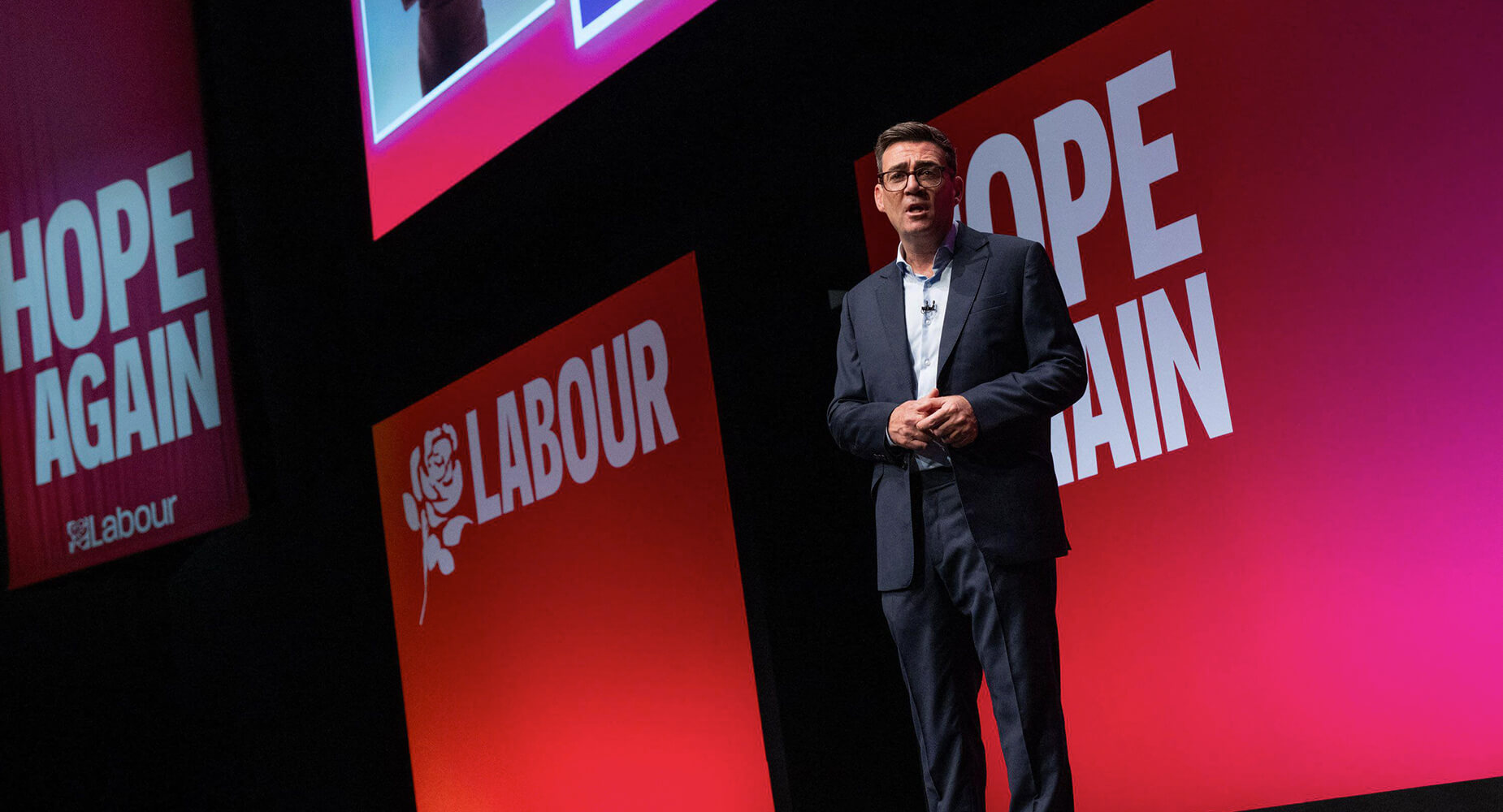
Labour did not leave Liverpool this year with a sigh of relief for its survival at the end of the week, but with its supporters positively jubilant, as the Prime Minister delivered a speech that insiders named the best since Blair and opponents on the right and the press conceded has grasped the political agenda and pulled the rug under from Reform UK and the Conservatives as Kemi prepares to respond next week in Birmingham next week.
The Prime Minister sought to use his Conference Speech to set out a battle of ideas with other parties. Burnham put more flesh on the bone of his plans to bring greater ‘public control’ into the key utilities of housing, energy, and water, renegotiate Britain’s relationship with the EU, reform the voting system, and pitch-rolled plans to replace the pension triple lock with an effective double lock of 2.5% or prices by 2030, to partly pay for a National Care Service to support the NHS.
As an extended introduction to the new Prime Minister for much of the public, the speech was effective, presenting a coherent case of who Burnham is and what he stands for. At times it was emotional, particularly a passage about his recently late father, drawing on the strengths that won Burnham the leadership in the first place. Much of his rhetoric is like his predecessor’s, but in presentation and policy Burnham has effectively set himself up as the ‘anti-Starmer’.
And the ploy seems to have worked. Persuasion UK, a non-partisan research institute testing public reaction to the speech, found that Labour’s voting intention rose to as much as 40% among voters who were shown unedited segments of the address compared to 31% support among voters in the control group who hadn’t.
Politically then it was a success. However, this was only the first of two tests for the Prime Minister this year he needed to pass, the second coming in the Budget in October where rhetoric won’t be enough. There were notable absences on detail on key areas of government interest including defence spending, welfare spending, and other measures that would be necessary to fund his more radical proposals.
Labour Conference set up a party intent on building a substantially more interventionist state on utilities and the housing market, raising the prospect of water nationalisations and suggesting that private landlords could lose their properties if they do not improve living conditions for private renters.
Between a global bond market sell off, war ongoing in the Middle East, the halving of the UK’s fiscal headroom, and a set of new expensive policy proposals being prepared for the next election manifesto, the prospect of significant new tax rises and spending cuts is now very real. The changes to the triple lock won’t fund a National Care Service on its own, and it remains to be seen whether the red meat thrown to the Labour membership and Burnham’s natural charisma will be enough to bring the country and his party with him through the tough choices that await it.
For now at least, the Prime Minister has successfully persuaded his party that he can.