Earlier this year, Hannah Spencer’s by-election victory for the Green Party of England & Wales in Gorton and Denton proved that the Greens could take traditionally deep-red seats.
However, since Andy Burnham’s accession to No.10, the Green party’s momentum has slowed. Lifelong Labour voters who switched parties or in protest at the rhetoric and actions of Sir Keir Starmer’s Labour are being tempted back.
Several new policy announcements from the Burnham government such as sanctioning products from illegal settlements in the West Bank, a shift in how immigration is discussed and – since Labour’s conference last week – pledges to reduce rough sleeping, reduce household bills, create a National Care Service, and open a pathway to renationalising utilities have weakened an often lightly-held affiliation to the Greens.
Like Gorton and Denton last year, the Holborn and St Pancras by-election was therefore totemic – the Greens had to show that they could win elections on their own merits – and not just as a protest vote against Labour.
This is why this morning’s by-election results matter so much – and it’s an underreported fact that this was actually in evidence at the recent Green Party Conference.
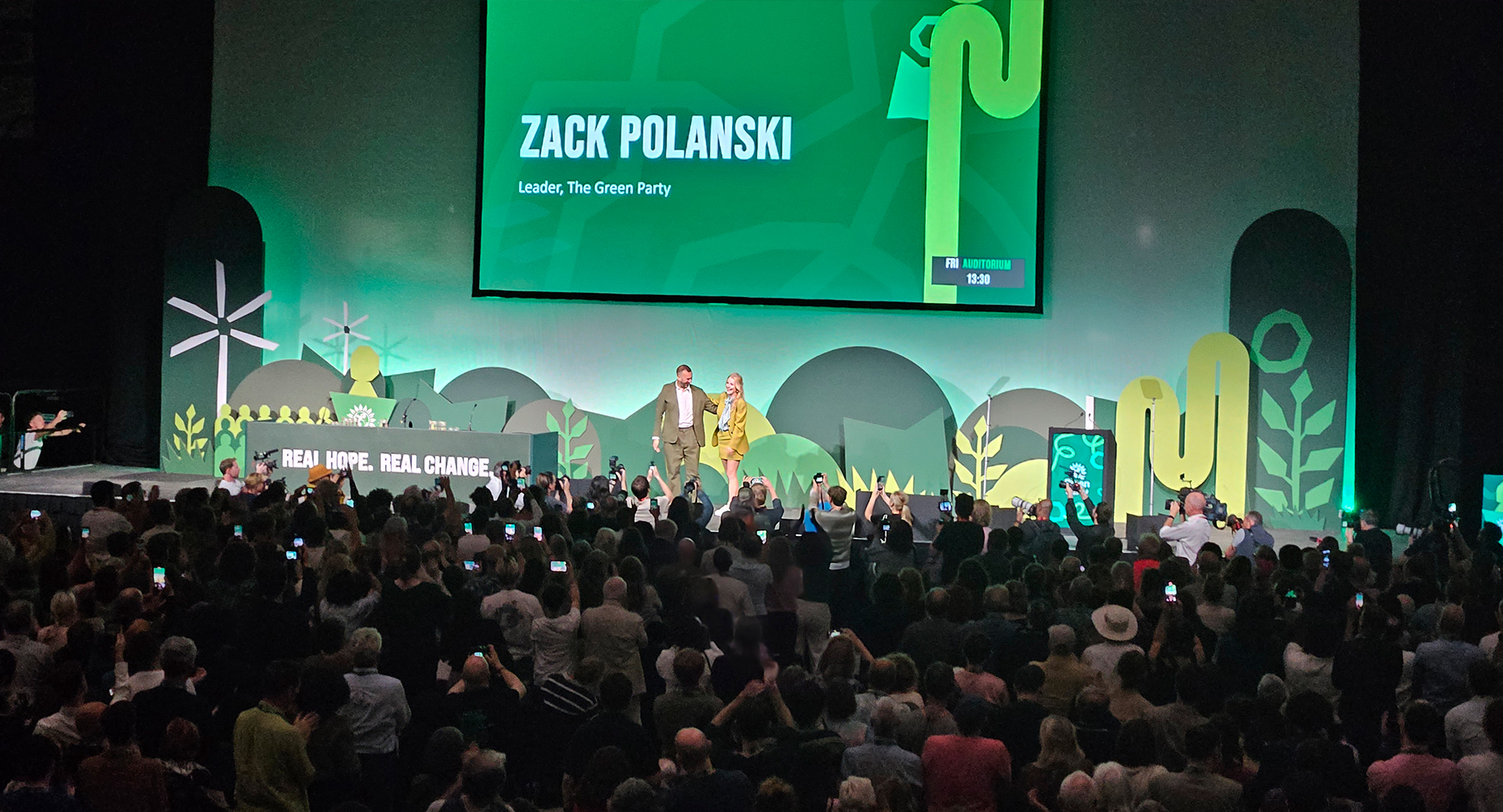
For instance, Zack Polanski gave the Leader’s speech at 1.30pm on Friday, rather than the traditional Saturday afternoon slot. That might not seem like huge news, but it was to allow him to get back to London over the weekend to canvass and campaign.
Moreover, many of the Green’s senior and most active organisers skipped (or only briefly dropped in) the Party Conference – preferring to focus on the “GOTV” (get out the vote) campaign in London.
This is not to say that the Green Party Conference was badly attended – indeed there were far more exhibitor stalls (usually trade unions and not-for-profits), attendees wearing yellow ‘observer’ lanyards, and members of the media than in previous years.
However, the Green Party is undoubtedly going through a shift.
In particular, the party has continued to move its focus to economic and social issues. For example, this year’s conference paid far more attention to to housing, cost-of-living issues, transport, and education – something evident not only in the number of programmed panels and fringe events focusing on bread-and-butter issues, but also in how well attended they were.
This is partly a reflection of a shift in the composition of the party’s membership – significantly altered by an influx of young (or young-ish) ex-Labour supporters since mid-2025, and also a reflection of its changed position in the country’s governance since last year.
The Green Party now has over 1300 councillors across the UK and controls 21 councils. Its ideological commitment to localism has (so far) meshed well with the demands of local government. Indeed, Councillor and local government events at the Green Party Conference were packed.
The party’s concerns are therefore reflective of its new responsibilities – an environmentalist agenda remains present, but it is refracted through the prism of local needs: promotion of green space and emission-free transport infrastructure in their areas; council housing buy-backs and building new, energy-efficient stock; in-sourcing social care; and education and childcare provision.
Indeed, while the passage of the ‘Zionism is Racism’ motion grabbed the headlines (and introduced divisions even among anti-Zionist Green members), and Holborn and St Pancras absorbed the attention of party leadership, the main mass of Green members appear more focused on establishing the Greens as a permanent force in local Government.
Yet continued local success, dependent as it is on being able to recruit and retain effective members, does in part rely on the promise or potential of national success.
Once again, that is why this morning’s result from Holborn and St Pancras really does matter.
Had he won the seat, Zack Polanski would have been able to show a clear path forward for the party’s success. The Greens could have argued that they have an attractive platform in their own right, and that furthermore their election victories pull Labour to the left.
However, by losing, the charge now will be that Green surge of 2025-6 was purely a product of disillusionment with Sir Keir Starmer’s Labour.
I wrote last month that the Green’s challenge for their conference was to both shore up their existing support, and establish an ethos and policy platform whose appeal was independent of the success or failure of Labour’s leadership.
As it turns out, the party conference was not the venue for that task – but Holborn and St Pancras was.