Key takeaways
- The economic outlook presented by the OBR is mixed, but far from disastrous. Growth has proved more resilient than expected, although higher borrowing costs are putting pressure on the public finances.
- Businesses face further tax and employment costs. Targeted tax increases, particularly on banks, and higher minimum wages risk adding to the pressures facing employers.
- The difficult decisions have largely been postponed. The Budget leaves significant questions about public spending unanswered, raising the prospect of further tax increases in 2027.
- The measures aimed to sell Burnham’s change narrative. The Budget showed off Labour’s likely dividing lines with the Opposition at the next election and doubled down on the Government’s cost of living agenda.
A political Budget with modest ambitions
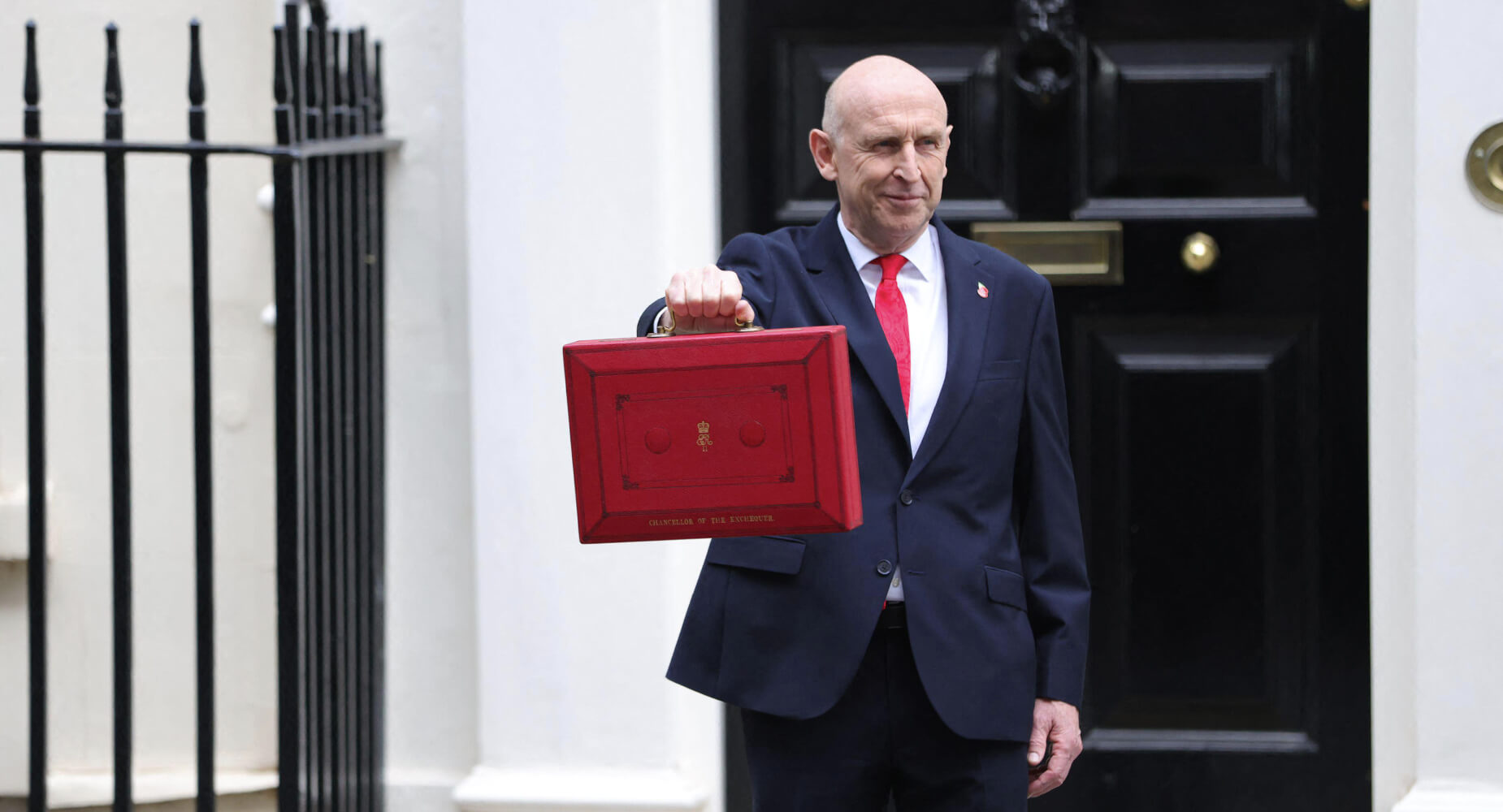
For all the government’s rhetoric about transforming Britain’s economic model, John Healey’s first Budget has been a relatively modest affair. Targeted support with living costs, further tax increases and additional government-backed investment have taken precedence over any fundamental change in economic policy.
That is not necessarily a bad thing. With inflation elevated and borrowing costs high, a cautious Budget was preferable to a dramatic fiscal expansion. Indeed, the market reaction to the Chancellor’s statement has been negligible.
There has been much opposition speculation over recent months that the Government is laying the groundwork for a snap General Election. This Budget will do little to dampen that speculation.
To a strong reception from his backbenchers, the Chancellor delivered a speech that sought to reassure business on fiscal discipline and align the government with voters concerned with the cost of living, paid for by those with little public sympathy such as banks, landlords, and gambling firms.
Announcements and rhetoric were both largely pre-briefed, except for a surprise announcement of a £100 direct payment for 20 million households in Band A to Band D properties to help with energy costs over winter and confirmed target of spending 3% of GDP on defence by 2030 and 3.5% by 2035.
The Chancellor spent much of his speech emphasising fiscal discipline and praised his predecessor Rachel Reeves yet appeared to roll out dividing lines with the Tories that would be central to Labour’s next General Election campaign, on the Iran War, Liz Truss and the cost of living.
The new Government’s approach to political activity is to be on campaign footing throughout its remaining term to sell its change narrative and outmanoeuvre its divided opposition, and so this is not unexpected. Though many external factors make calling an early General Election very difficult, many will speculate that the Government has purposefully left the door open to calling one if able.
The economy and public finances: downgrades, but not disaster
The Office for Budget Responsibility (OBR) has raised its growth forecast for 2026 to 1.2% from the 1.1% expected in March. However, this move is smaller than many expected and more than offset by a cut in the 2027 forecast to 1% from 1.6%, reflecting drags from higher energy prices and borrowing costs.
The fiscal outlook is similarly mixed. Higher gilt yields have increased debt interest costs, but stronger economic activity and inflation have also boosted tax revenues.
On balance, the OBR now estimates that borrowing will be higher in each of the next five years than previously planned and that Healey will have £15bn of headroom against his main fiscal rule in 2029/30, compared with £23.6bn in March. But the precise size of this buffer matters less than whether the Chancellor has a credible plan to reduce borrowing and control spending.
The Chancellor comes back for even more tax rises
After Rachel Reeves increased taxes by almost £70bn across her two Budgets, businesses and households might reasonably have hoped for some relief.
Instead, Healey has announced additional targeted tax increases, with the banking sector particularly exposed. That said, the increase in the bank corporation tax surcharge from 3% to 6% is less than expected and is time-limited for 15 months. This should raise around £1.5bn per year.
Taxing profitable banks might appear a relatively painless way to raise revenue. But higher taxes on banks can ultimately affect their customers through more expensive credit, while also discouraging lending and investment. That sits uneasily alongside the government’s ambition to make Britain more attractive to international investors. Moreover, history isn’t short of ‘temporary’ tax rises that ultimately proved permanent.
There were also some modest tax cuts. The 100% small business rates relief threshold will rise from £12,000 to £18,000. The cut in business rates already applied to pubs, clubs and music venues will be extended to more shops, restaurants and gyms. The government will freeze rates in real terms for some businesses in those sectors for two years, with these measures funded by more robust tax collection on online sales.
However, changes affecting online marketplaces and business rates raise questions. Addressing tax avoidance and distortions between different types of businesses is reasonable. But shifting the tax burden between sectors does not necessarily make the UK more competitive.
The broader picture is concerning. Before the pandemic, taxes had averaged around 32% of GDP since the Second World War. The OBR now expects the tax burden to be almost six percentage points above that average by 2030-31, equivalent to approximately £200bn more in annual revenues than if the pre-pandemic tax burden had been maintained.
The question is how much more taxation the economy can absorb without weakening incentives to work, invest and grow.
Relief for households, further pressures on employers
The Budget offers some welcome support for households facing higher energy bills. The temporary removal of VAT from energy bills will be extended to July 2027. 20 million households in lower council tax bands will receive a one-off £100 discount paid into bank accounts over the winter. And the abolition of fixed standing charges on household gas bills will benefit lower-consumption households. However, the costs will be recovered through higher unit charges, meaning heavier users will pay more. This is therefore largely a redistribution of energy costs rather than a reduction in the underlying cost of supplying energy.
There is a reasonable case for targeted support during an exceptional energy shock. But temporary assistance risks becoming another permanent spending commitment. And it will pump more money into the economy at a time when inflationary pressures are elevated and the Bank of England already appears minded to begin raising interest rates again.
The longer-term challenge remains Britain’s expensive energy. Without measures to improve supply and reduce costs, governments may find themselves repeatedly subsidising energy bills.
Meanwhile, the National Living Wage will rise by 3.9% to £13.20 next April. That will help millions of lower-paid employees but represents another increase in employment costs for businesses already absorbing higher National Insurance contributions and regulatory pressures.
This is particularly relevant to labour-intensive sectors such as hospitality, retail and leisure, where rising employment costs risk discouraging recruitment.
With youth unemployment already a concern, the decision to retain a lower minimum wage for 18–20-year-olds provides some relief to employers, although their rate will also increase by 3.9%.
Will government intervention deliver growth?
The Chancellor has announced further measures intended to boost homeownership and investment.
The new Your First Home scheme will provide government-backed equity loans for eligible first-time buyers purchasing new-build homes, alongside a new First Time Buyer ISA. These measures may help some households onto the property ladder. But supporting demand without increasing housing supply risks pushing prices higher.
With the government’s target of building 1.5 million homes by 2029 increasingly out of reach, planning reform and measures to increase construction remain more important than additional buyer subsidies.
Healey also announced £20bn of additional capital for the National Wealth Fund and British Business Bank, supporting investment in areas including AI, defence and clean energy.
Some projects may deliver worthwhile returns. But there is no guarantee that government-backed investment generates additional economic activity rather than subsidising projects that would otherwise have proceeded privately. The test should be whether public funding addresses genuine market failures and attracts additional private investment.
The Budget’s devolution measures raise similar questions. Giving mayors greater control over locally generated tax revenues could improve incentives for economic development. But transferring powers between different layers of government will only deliver results if accompanied by better decisions, clearer accountability and greater efficiency.
Public spending is the unresolved challenge
Perhaps the most important feature of this Budget is what it leaves unresolved.
The Institute for Fiscal Studies estimates that accommodating pressures on public services, maintaining planned health spending increases and raising defence spending to 3% of GDP could require an additional £35bn of public spending annually by 2030-31. This is not an unavoidable fiscal black hole. It reflects choices about spending priorities and the size of the state.
The Chancellor still faces difficult decisions on public sector pay, welfare, defence and departmental budgets at the Spending Review which has been mooted for late next year. If those pressures are met through a bigger state rather than spending restraint and reform, today’s relatively modest tax increases could prove a prelude to a much larger tax-raising Budget in 2027.
The Pagefield review: Fiscal credibility and the challenge of growth
The Chancellor deserves some credit for avoiding a major fiscal expansion. The OBR’s latest forecasts also continue to envisage a relatively rapid reduction in government borrowing compared with other major economies.
But delivering that fall in the deficit depends on tax revenues meeting expectations and planned spending restraint proving achievable. Further tax increases could undermine the growth needed to sustain those revenues.
There are reasons for optimism. AI-related investment and innovation are providing important sources of growth, largely driven by the private sector. But household consumption remains weak, constrained by sluggish real incomes, high interest rates and an already-heavy tax burden.
The priority should be to create the conditions for stronger private sector growth through spending discipline, cheaper energy and a more competitive tax and regulatory environment.
The real test will come in 2027, when Healey must demonstrate that fiscal discipline means controlling expenditure and supporting growth, rather than continually finding new sources of tax revenues.