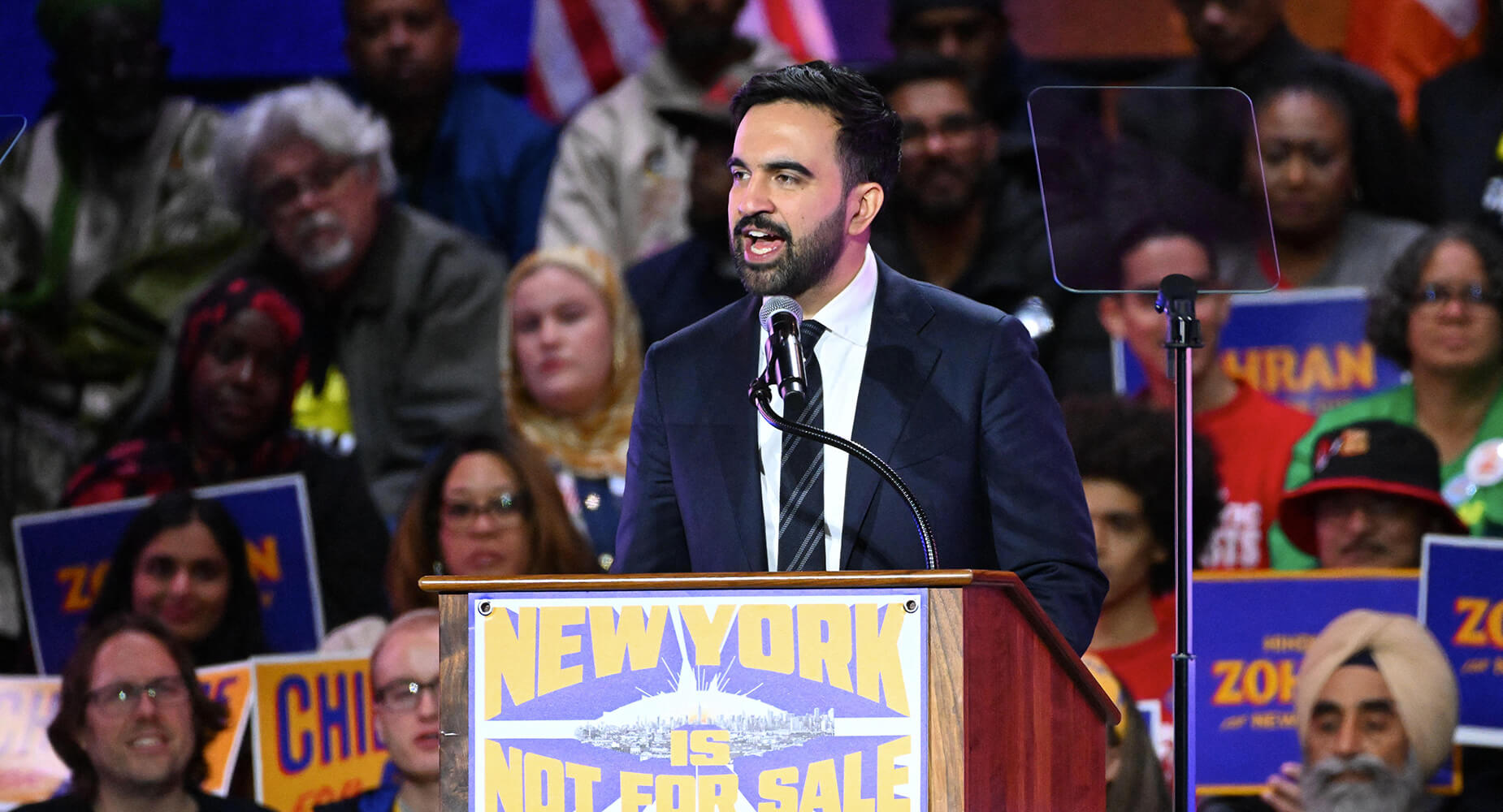
Zohran Mamdani’s social media strategy played a significant role in his rise to New York City Hall.
Zohran Mamdani’s social media first strategy propelled him into office just eight months ago. We’ve seen this type of rise before, but what is new is Mamdani’s long-term commitment to his campaign communication style.
Rather than retreating into the more traditional communications of political office, since gaining power, he has retained the informality and responsiveness of his campaign, increasingly bringing his audience directly into the content itself.
“Mamdani, fix this.” It has become a familiar phrase on TikTok.
New Yorkers spot something wrong with their city, point a camera at it and ask their Mayor to sort it. One user posted about potholes on his street. By the time he returned from work, they had been filled. Another complained about the lack of drinking fountains in Prospect Park during hot weather; Mamdani later responded with a video showing city workers installing temporary fountains.
Not every request has been quite so serious. When one user joked about the absence of a boyfriend waiting for her outside the Brooklyn Museum, the Mayor’s account joined the joke, pointing her towards the city’s summer events programme for potential date ideas.
On the surface, it is simply another TikTok trend. But its success points to something more significant about Mamdani’s approach to social media, which is rather than simply building a large audience and broadcasting to it, his team has created an online presence that people actively want to interact with.
Winning did not end the campaign
During Mamdani’s mayoral campaign, he produced videos that felt native to the platforms they appeared on, combining strong openings and recognisable New York locations with humour, personality and simple messages around issues such as affordability.
That approach did not disappear once the election was won.
Between his election and inauguration, social listening platform Visibrain found that Mamdani published 657 posts across Instagram, TikTok, Bluesky, Facebook, X and YouTube, generating more than 1.42 billion impressions.
The scale of that activity shows that his social media strategy was not simply a tool for winning votes. By continuing to publish frequently after election day, Mamdani maintained the visibility and familiarity he had built during the campaign, rather than allowing his online presence to become more distant or institutional as he moved into City Hall. It also meant that the audience he had built during the election remained engaged and ready to interact with him once he took office, creating the conditions for trends such as “Mamdani, fix this” to take hold.
That consistency matters, particularly as political social media often takes on a very different character once an election is over. The personality-led videos and informal interactions of a campaign give way to podium clips, official visits and carefully drafted statements. Mamdani has largely resisted that shift, retaining the tone and behaviours that helped build his audience in the first place.
The audience is part of the strategy
The most interesting thing about “Mamdani, fix this” is that it was not a format brainstormed in a City Hall content meeting. It emerged from the audience itself, something brands and organisations often spend considerable time trying to manufacture.
The format works because it creates a natural cycle of participation. A New Yorker posts a problem, City Hall responds and the original creator can then share the outcome. Other users see that interaction and are encouraged to make their own requests, creating further opportunities for the Mayor’s team to respond. It is highly repeatable and ultimately a ‘win-win’ for both parties.
In other words, Mamdani’s audience is not simply consuming his content; it is helping generate it. That represents a much deeper form of engagement than views or likes alone and demonstrates the value of treating social media as a conversation rather than simply another publishing channel.
The lesson for communicators
The obvious conclusion from Mamdani’s success might be that politicians simply need to get better at TikTok. But the more useful lesson extends well beyond politics.
Being social first is not about taking something conceived elsewhere and resizing it into a vertical video. It requires understanding how people actually behave on a platform, paying attention to the conversations developing around you and being agile enough to respond when an opportunity emerges.
Mamdani’s team continues to publish frequently and create its own content, but some of its most effective recent moments have begun somewhere else entirely – with an ordinary person opening TikTok and asking the Mayor a question.
Mamdani used social media to help win an election.
“Mamdani, fix this” demonstrates what can happen when, after winning, you continue to engage.