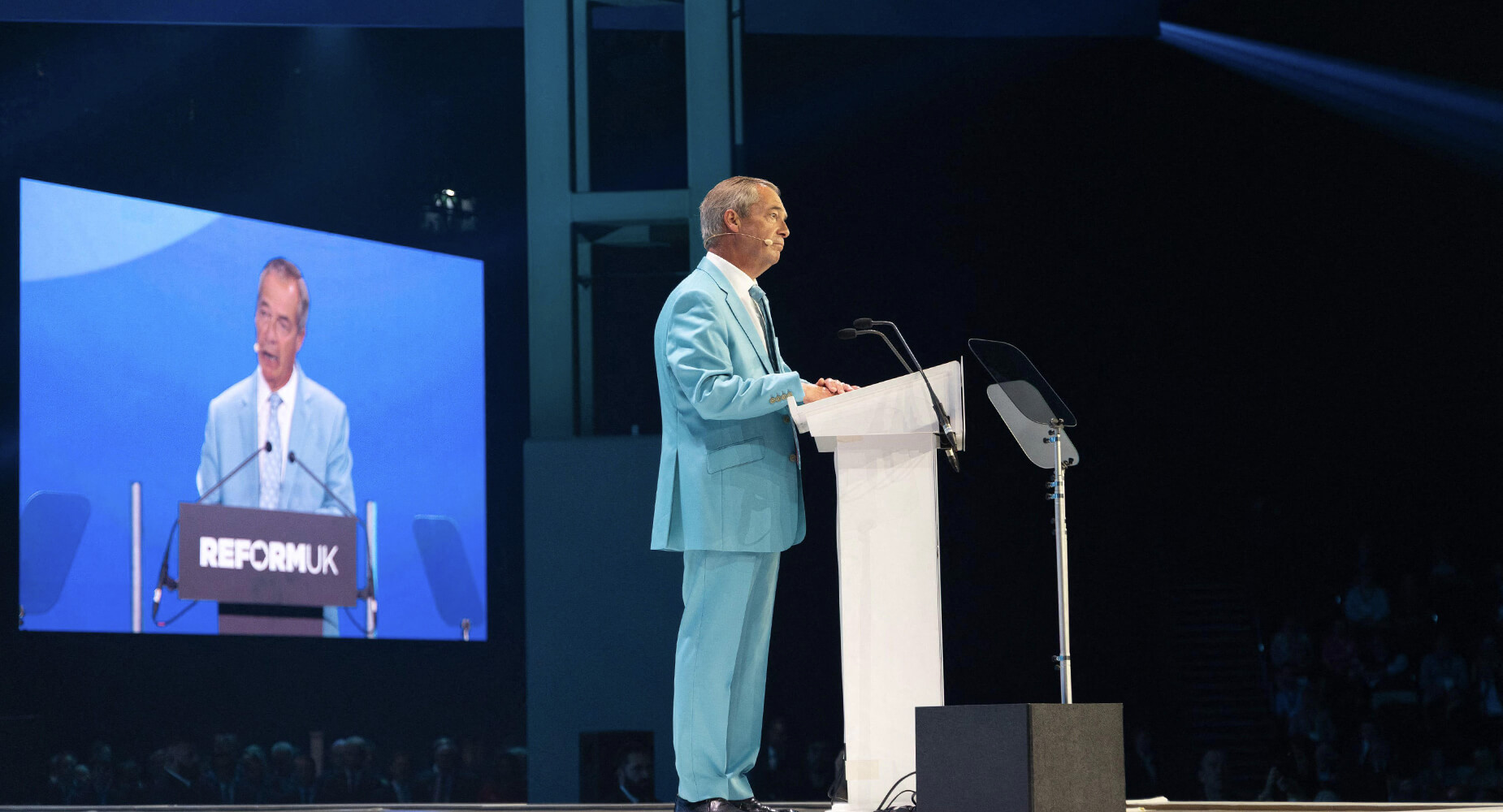
The Reform Party’s conference this year was the first to include a dedicated Business Day, bolted on to the front of the members’ event at the NEC. The party extended the conference by a day specifically to invite corporates in and set out how they would work together in government. Around 600 executives turned up, which is a serious step up on last year. The appetite from business was real (and far less squeamish).
The biggest challenge for the party is depth. Thursday ran on speeches and panel events from Robert Jenrick and Richard Tice, with Danny Kruger and James Orr filling in the gaps. Very little of it was direct engagement. That’s not because they are shy about business engagement; it’s because they only have a small number of front-line politicians who can hold a room of investors. And with Orr gone the next day, that number went down by 25%.
They were also at pains to describe themselves as the party of the worker. That plays well with the voter base and it’s central to the strategy of taking Labour seats, so we should expect a lot more of it. But it creates a tension with the Thatcherite instincts that still run through the party, and which you still glimpse whenever the conversation turns to investment, tax or regulation. Jenrick told Business Day that Reform would cut taxes for working people, but not until markets were confident the cuts could be afforded. That’s a contradiction in a single sentence and it sums up the policy tension in the party: which of those instincts will win?
The most substantial piece of work on show was Tice’s Planning Teal Paper. Serious thinking has gone into it. It proposes a national presumption in favour of brownfield residential schemes, scraps CIL, Section 106 and biodiversity net gain on those sites, removes nationally imposed housing targets and abolishes spatial development strategies including the London Plan. Affordable housing requirements go on brownfield land altogether, except in England’s five largest cities, where 5% would apply on schemes of 20 homes or more. Plenty of that is contentious, particularly the loss of affordable contributions and the removal of plans that work across boundaries. But it is a genuine consultation, open until 31 December, with final policy due next year, and it’s worth the real estate sector taking it seriously.
What’s striking is how little distance there now is between parts of that argument and the noises coming out of government. Ministers are making much the same case about consenting delays, environmental requirements and the cost of legal challenge, often in much the same language. Reform would say that’s because it has “won the argument” – a phrase Jenrick used a lot. And he has a point.
Beyond planning, the wider economic vision is harder to pin down. The pitch on Business Day leaned hard into stagnation: prosperity lost, capital investment gone out with the tide, an old orthodoxy keeping the country stuck. I suspect the logic is that this motivates voters, but a great deal of the economic argument still seems to come back to immigration. Wherever you stand on that, it narrows the ground for a substantive policy conversation with the business community.
And then the actual story of this conference. Channel 4 broadcast its undercover footage on Thursday night, right in the middle of the business dinner. By Friday morning, Lee Anderson was confirming that Dan Jukes and James Orr – the man championing the policy vision on every panel at Business Day – had stood down and left the building.
Most of the analysis has been about what this does to the polls. Freshwater found 62% of voters think the allegations point to a real problem with the party, and Reform slipped behind Labour for the first time in eighteen months. But there is a more boring point about what this means for business engagement. Reform spent a year building towards a moment when it could tell business it was ready to govern, and the story out of Birmingham was unhelpfully chaotic.